


Acupuncture is a gentle, natural therapy that has been used for thousands of years to help the body heal and function at its best. It involves placing very thin, sterile needles into specific points on the body to encourage balance and support your body’s natural healing processes.

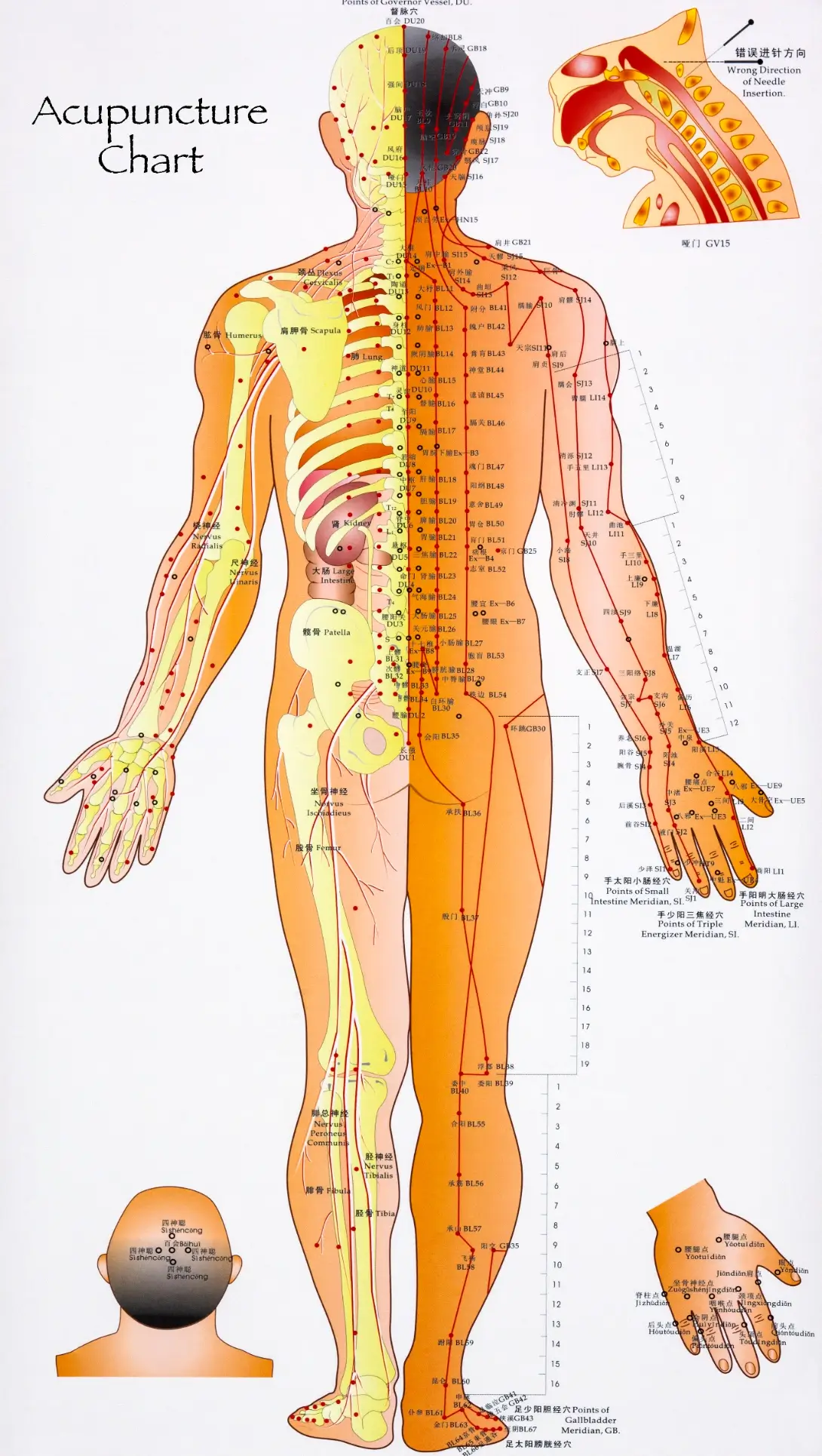
Traditional Chinese Medicine describes the body as having pathways called meridians. Think of meridians like a network of highways that connect different parts of your body. Along these pathways flows your body’s vital energy, known as Qi (pronounced “chee”).
When the flow of Qi becomes blocked or out of balance—whether from stress, injury, illness, poor sleep, hormones, or everyday life—you may begin to experience symptoms such as pain, fatigue, digestive issues, headaches, anxiety, or difficulty sleeping.
Acupuncture stimulates specific points along these meridians to help restore healthy flow and communication throughout the body. As balance returns, your body is better able to heal, regulate itself, and function the way it was designed to.
Traditional Chinese Medicine views the body as an interconnected system. Acupuncture uses specific points associated with different organ systems to help restore balance, improve communication throughout the body, and support optimal function. This holistic approach can help promote overall health and the body’s natural ability to heal
From a modern medical perspective, acupuncture has been shown to:
In other words, acupuncture helps activate your body’s own healing mechanisms rather than simply covering up symptoms.

Most people are surprised by how comfortable acupuncture feels. The needles are much thinner than those used for injections or blood draws. You may feel a brief pinch as the needle is inserted, followed by sensations such as warmth, tingling, heaviness, or a dull ache—all of which are normal signs that the point is being activated. Many patients become so relaxed during treatment that they fall asleep.

Acupuncture is commonly used to support:
Our goal is to treat the whole person—not just the symptom. Every treatment is personalized to address the root cause of your concerns while supporting your body’s ability to heal, restore balance, and improve overall well-being.

Acupuncture and dry needling both use thin needles, but the clinical intent is different.
Dry needling is usually more direct. If a specific muscle has a trigger point, spasm, or neuromuscular pain pattern, dry needling may be used to target that tissue. It is often chosen when the main issue is a stubborn knot or local muscle restriction, like a calf that spasms.
Acupuncture is usually broader, when symptoms involve pain sensitivity, stress response, recurring tension, or multiple areas of discomfort. The needles may be placed in a combination of local and distant points depending on the pain pattern, but not necessarily just in one place like with dry needling.
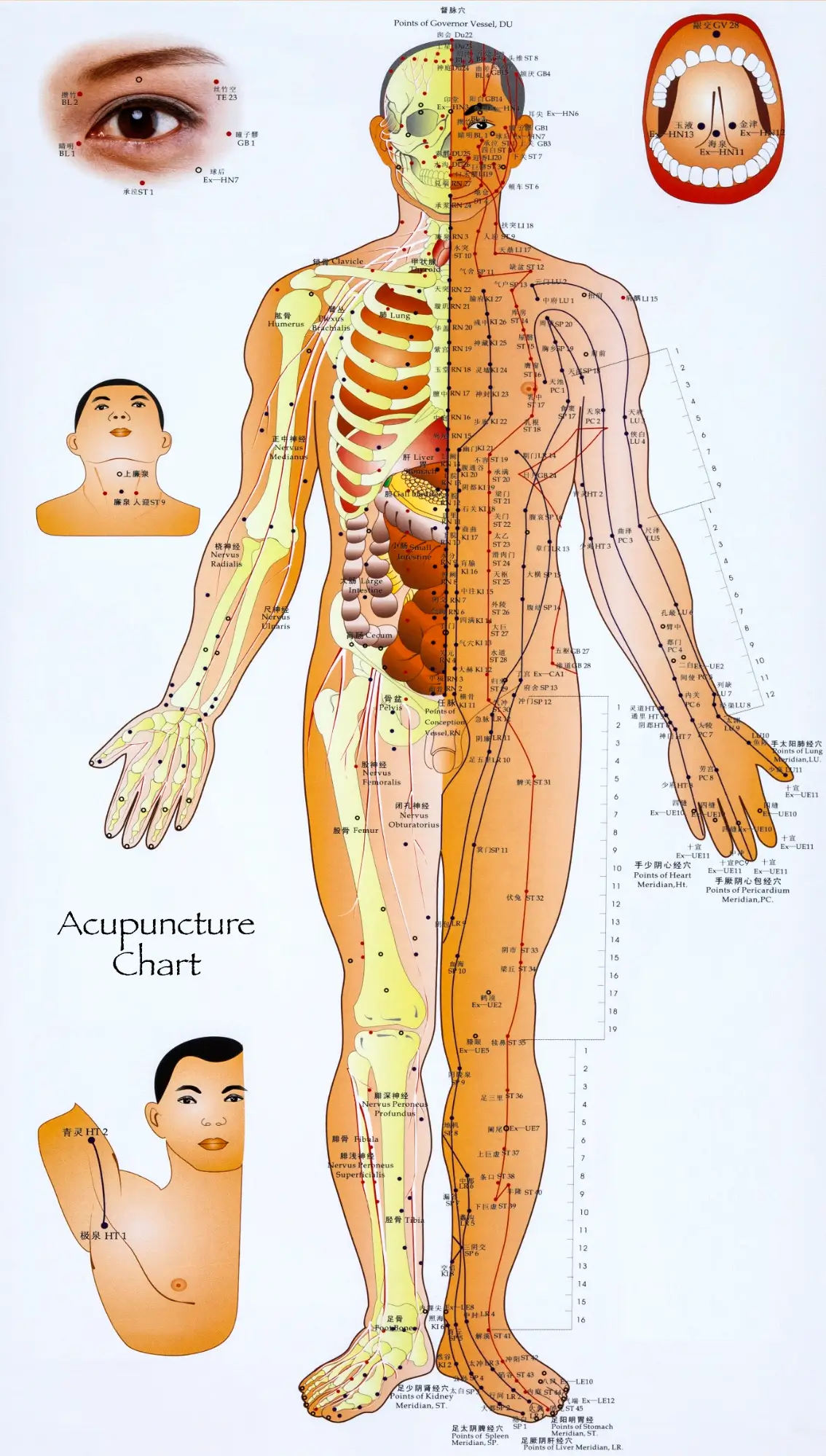
Your first visit starts with a conversation about your symptoms, health history, and goals. We want to know when the issue started, what triggers it, what improves it, and whether there are patterns with sleep, stress, work posture, exercise, or previous injuries.
During treatment, thin needles are placed at selected points based on what we are addressing. Some points may be near the area of discomfort. Others may be farther away. That can surprise first-time patients, but acupuncture is not always about placing needles directly into the painful spot. Points may be chosen because of how they relate to the nervous system, muscle tone, or the broader pattern being treated.
Most patients feel little to no pain when the needles are placed. Some feel a quick tap, mild pressure, warmth, heaviness, tingling, or a dull ache. The needles stay in place while you rest.
After treatment, we look at how your body responds. Did the area feel less sensitive? Did range of motion change? Did the headache pressure shift? Did you feel calmer or sleep better afterward? Those responses help guide further treatments, acupuncture or otherwise.
Acupuncture is often a better fit for symptoms that are recurring, tension-driven, or sensitive rather than purely structural.
For example, someone with recurring neck tension or low back tightness that worsens during work stress may be a good candidate.
Depending on the person, acupuncture may be used as part of care for:
Acupuncture is not the right answer for every condition, and we would never want to present it that way. However, for the right patient, it can be a useful part of a broader care plan focused on comfort, mobility, and better function.


Acupuncture is generally considered low risk when it is performed by a trained provider using sterile, single-use needles. The most common side effects are minor and temporary, such as soreness, light bleeding, bruising, or tenderness where the needles were placed. Some people may also feel tired, lightheaded, or more relaxed than expected after treatment. We comply with FDA regulations that acupuncture needles are medical devices and store them in a sterile environment and labeled for single use.
The most common side effect is infection which is typically from nonsterile needles. Other more serious complications like punctured organs, collapsed lung, or injury to the central nervous system are possible but very rare as proper training, clean technique, and patient screening matter limit accidents from happening.
Acupuncture is not appropriate for every patient. Before treatment, tell your provider if you
If your symptoms, health history, or comfort level suggest you might have an adverse affect, a safer more more appropriate approach would be recommended by our doctors.
Acupuncture is a very minor procedure and recovery is limited with usually no formal downtime. Pay attention to how your body feels for the rest of the day and adjust your schedule accordingly to give yourself time to recover if necessary.
Some patients feel relaxed or a little tired after treatment. Others feel lighter, looser, or mildly sore around certain needle sites. Small bruises, minor tenderness, or slight redness can happen, but typically fade on their own.
Drink water regularly, eat normally, and avoid unusually intense activity after the appointment and your body will begin to feel better. If you feel lightheaded, unusually sore, or have symptoms that concern you after acupuncture, contact us and we can help you decide what to do next.

As Doctors of Chiropractic and Functional Medicine specialists, we are trained to evaluate the musculoskeletal system, nervous system, joint function, and movement patterns. Our team is uniquely qualified to help you understand your body and how each part affects another. We understand the connection between headaches and neck tension, back discomfort and muscle guarding, or a variety of other symptoms that do not have one obvious cause. We look at how the spine, joints, soft tissue, posture, and nerve irritation may be contributing to the issue rather than treating acupuncture as a standalone service.
Our clinical background matters when a patient comes in with ailments as we look at the broader view of health. Pain may be because you pulled a muscle but can also be caused by inflammation, poor sleep, stress, nutrition, hormones, or recovery habits. We consider all factors when they are relevant to a patient’s symptoms and their outcome goals.
Beyond physical modalities, our doctors are well versed to understand safe techniques, patient comfort, and appropriate treatment protocols depending on the condition.
With experience in clinical settings and private practice since 2012, we’ve helped patients see positive improvements in pain reduction, range of motion, and more using acupuncture and other functional medicine techniques.
 Great place friendly staff and left feeling better
Owner's reply
That's great to hear! Thanks for your feedback 😀Dr. Bahan was very thorough and answered all my questions. She also made it easier to move my neck. I felt very comfortable. I met two other staff members Ian and Brittney. They were both very nice. Brittney did an excellent job explaining everything as we did the tour. Thank you so much. I plan on coming back!
Owner's reply
Great to hear. We're so excited to work with youHIGHLY recommend Dr Hensel at Active Edge! I came in with extremely stubborn GI issues including IBS, acid reflux, esophagitis, among others which were only being made worse by my gastroenterologist. Dr Hensel listened very intently during our first consult (unfortunately a rare skill among most physicians these days) after which we had a treatment plan that within 1 month had me feeling dramatically better! Not only my GI symptoms, but many other long standing issues like food sensitivities, chronic pain, headaches, and brain fog have improved as well. These were Issues I had long since gave up looking for solutions for until now. I'm continuing to improve daily and am very grateful to have found this practice. Definitely check them out!
Owner's reply
Yay!! We love being part of a good life changing experience story ❤️ thanks for sharing yoursThis is not just a chiropractic office. They have chiropractic doctors who will examine you and help you get in better communication with your body - identifying what’s wrong/right. Beyond that, there is a spa, acupuncture, red light therapy, etc. all designed to be used in your journey to healing your body. Incredible. I thought I was just going to a chiropractor.
Owner's reply
It's great to have you in the office Mike! Your body is pretty darn amazing and can adapt in so many ways, so we've i corporate as many ways to boost and accelerate healing as we can handle. We're glad to be your health resource!been going here for a number of years now. very helpful with any nagging or new trouble spots. appreciate the subscription model rather than pay per visit. Done many of their service, dry needling, cupping, adjustments, red light, sauna, cold tub, and more.+0
Owner's reply
Great to hear your feedback-thank you for sharing. We love having you as a partner!Amazing holistic practice! Go see Dr. Jasmine and her staff for chiropractic needs. They will truly change your life.
Owner's reply
Love hearing your feedback! Thanks KylieJasmine is so amazing... caring, talented and truly so far beyond almost any physician in musculoskeletal therapy!!!!
Owner's reply
Thabks for sharing your experience Noel!!Exceptional care at ActivEdge! I'm moving SO MUCH BETTER! Thank you! I feel 20 years younger!
Owner's reply
That's awesome Jess! We're just getting started :)Great atmosphere many options to improve health care. Friendly, professional, attentive. Great results in my first visit. Thank you for listening and caring.
Owner's reply
You're welcome. It's our pleasure. We're looking forward to working with you!Very friendly and knowledgeable. They offer innovative care and would recommend .
Owner's reply
Thanks for your feedback. It's our pleasure to work with youI had nothing but great experience here. Friendly service and staff
Owner's reply
❤️ we've had a great time working with you too :)Started going to Active Edge for digestive issues and anxiety after I felt like I wasn't being heard by other doctors just trying to throw prescriptions at me. They completely changed my life and helped me get back to feeling like my self and operating at my best. Now my whole family goes to Active Edge for their health and wellness.
Owner's reply
Yay! We love having you all in the office :)I’ve been coming to ActiveEdge off and on for 4+ years and continue to leverage their expertise as a resource as I move through different life experiences. The team has helped me with everything from recovery to improved movement for marathon training to pregnancy alignment, pelvic floor adjustment postpartum, and chiro adjustments for my newborn. Everyone is phenomenal to work with. My insurance doesn’t cover their care, but I refuse to go anywhere else!
Owner's reply
❤️This was my first experience at Active Edge Chiropractic and Functional Medicine. I went in wanting to dry needle for muscle tightness related to lifting. Dr. Bahan was wonderful! She adjusted my back and neck and notified me of areas I am misaligned that are likely contributing to some other areas I have tightness. Her dry needling made me feel so much better and I already have such relief. The facility was very clean and the ladies working thr front desk were very kind and informative. I super excited for my next visit and to work with their team to better optimize my health!
Owner's reply
Thats wonderful to hear! Thanks for sharing your experience :)I absolutely Love this place. From the front desk help, to the level of care from the Dr’s, to the variety of treatments they offer, I have found my one stop shop for wellness and effective holistic care.
Owner's reply
Yay! Goal achieved :) thabks for your feedback. We love being part of your journey!!I am visiting family haven’t had recent neck surgery and was in need of dry needle therapy as per my neurosurgical team. I reached out to the office and they were more than trying to accommodate me on a Friday when they were closing at noon. The staff was pleasant, kind, and well informed. I wouldn’t be seeing them again on Monday.
Owner's reply
So glad we were able to make it happen for you!!I was very impressed with my first visit.
Owner's reply
Thank you. We look forward to continuing to impressing you :)This is the most effective and comprehensive chiropractic care I have ever received. The entire team is friendly and helpful. The space has a welcoming yet professional vibe. Don't wait. Get on the schedule there!
Owner's reply
Glad to have you back in Gina!Love the vibe and staff is amazing. I am pleased with the results from my visits with Dr. Erik Hensel and go every week. Try their ExoMind and Emsculpt therapy.
Owner's reply
Thanks for sharing! See you again soon

Most people feel little to no pain during acupuncture. You may feel a small pinch as a needle is placed, followed by pressure, warmth, heaviness, tingling, or a dull ache. Many patients feel relaxed once the needles are in place.
It depends on your symptoms, how long the issue has been present, your overall health, how your body responds, and if you have other treatment plans in progress. Some people notice changes quickly, while others do better with a more consistent plan. We will make recommendations based on your evaluation and response to care.
Yes, acupuncture may be combined with chiropractic care when it fits the patient’s needs. Acupuncture may help support relaxation and tension relief, while chiropractic care may address joint motion, mechanics, and movement patterns.
Often, once the needles are placed you will feel nothing (unless you move, and then your body will rudely remind you that you have needles in the muscle you just moved). Sometimes you will feel the needles when they are removed, sometimes you will not. Once you are needle free, you may have a heaviness or lightness about the area or extremity. You may feel like you did a hard work out, or that you are much looser. Some patients note other responses, but those are the most common.
The best option depends on what we find during your evaluation. Acupuncture may be a better fit for broader pain, stress, tension, or whole-body support, while dry needling may be recommended for more specific muscle knots, trigger points, or neuromuscular tension.
No. Pain is one of the most common reasons people seek acupuncture, but it may also be used for stress-related tension, nervous system support, muscle tightness, recovery, and general wellness. Our team can help determine whether it makes sense for you or not.
Comfortable, loose-fitting clothing is best. Depending on your treatment plan, your provider may need access to areas such as the arms, legs, neck, shoulders, or back.

At this point, you are feeling better than you ever thought you could as you are feeling energized and thriving. You have learned a lot about your body, you are moving more efficiently, you understand your body’s cues, and you have a good idea of what to do with these cues. This means you get to try new things, achieve new goals, and conquer new challenges! As you do, we will be here as your resource, as needed, to help you nourish, boost, and refresh your health.

Pain is generally the last symptom to show up and the first to go away. This means that by the time you realize there is a problem, there has been a problem for a long time. Especially for chronic or recurring issues, understanding how you got to where you are is so important for getting to where you want to go. In this stage of your journey, you will resolve underlying dysfunction, remove cheats, and retrain habits. As we aid you in activating your body’s natural healing potential, we will help you regain movement, energy, and body function both inside and outside. Throughout this process, you will start to feel greater ease and inspiration as you restore communication and efficiency in your body. Together, we will constantly assess, observe, and reassess your body’s responses to boost your results.

You are your own person, with your own collection of life events which brought you to where you are today. You deserve to be heard, seen, and treated as the individual you are. Your journey begins with your Discovery Evaluation. This first visit includes your exam which works to uncover the root of your issue(s), new patient diagnostics, and, of course, your first treatment. This is how we will help you begin connecting the dots and feeling better. After your first treatment, we will ask you to observe your body’s responses– good, bad, or indifferent. There is no wrong answer as this is just starting point information and direction for moving forward. In your second visit, we will review this feedback and your diagnostics to further identify potential underlying causes and compensations. We will combine everything we have learned about you, consider your goals, and together create a plan to resolve your concerns from the roots up.



