

If you spend most of your day sitting at a desk, standing at work, or constantly on the move, you probably know how quickly back pain can creep in. What many people don’t realize is that posture—how you hold yourself throughout the day—has a huge influence on how your spine feels, especially for those already dealing with ongoing back pain.
At Active Edge Chiropractic & Functional Medicine, we see this every day. Patients often come in thinking they need a stronger back, a deeper stretch, or even new shoes, when in reality the missing piece is much simpler: learning how to move and hold yourself in ways your body is designed for. This is where postural training comes in.
Think of postural training as teaching your body to work with gravity instead of fighting against it. Whether you’re sitting, standing, or walking, better posture can dramatically reduce strain on the spine—and with it, a lot of stubborn back pain.
Why Your Posture Matters More Than You Think
Your spine is designed to be incredibly strong and resilient, but it does best when the body is aligned. When posture slips, even a little, certain muscles start overworking while others switch off. Over time, this imbalance begins to feel like the kind of compensation patterns often addressed in functional rehab.
- A dull ache in the lower back
- Tightness between the shoulder blades
- A constant desire to “crack” your back
- Fatigue by the end of the day
- Stiffness that’s worst first thing in the morning
The modern world doesn’t help—looking down at screens, long commutes, and hours of sitting put us in positions we weren’t built for.
Some common posture patterns we see include:
- Forward head and rounded shoulders
- A deep arch in the lower back (anterior pelvic tilt)
- Swayback posture
- Uneven weight on the feet when standing
The good news? Most of these patterns improve quickly once you start retraining your mechanics.
How Postural Training Relieves Back Pain When Sitting, Standing, and Walking
What Is Postural Training, Really?
Postural training isn’t about standing like a soldier or holding your shoulders back all day. In fact, that usually does more harm than good.
It’s more about:
- Helping underused muscles wake up again
- Teaching overworked muscles to relax
- Regaining a sense of where your body is in space
- Moving in ways that feel natural and sustainable
Instead of forcing the body into a “perfect” posture, we help you build strength and awareness so good posture becomes your default without trying.
Why It Helps So Much
When your joints and muscles start working the way they’re supposed to, you naturally:
- Move more efficiently
- Reduce strain on your spine
- Improve breathing and core stability
- Decrease inflammation
- Support long-term back health
You’ll notice you’re not constantly shifting, fidgeting, or searching for a “comfortable” position—your posture does the work for you.
Posture Tips for Sitting
If you sit a lot during the day, this section may be your game changer, as poor posture often contributes to hiatal hernia flare-ups by compressing the upper abdomen—check our back and neck pain solutions for related relief strategies.
Common Sitting Traps
Most people gradually fall into patterns like:
- Slumping or rounding their low back
- Leaning forward toward the screen
- Sitting with legs crossed for hours
- Favoring one hip without realizing it
A Better Way to Sit
Try this simple reset:
- Plant your feet on the floor (uncrossed).
- Slide your hips all the way to the back of your chair.
- Let your spine settle into a gentle S-curve—nothing rigid.
- Relax your shoulders.
- Keep your head stacked over your torso rather than reaching forward.
- If you sit at a computer, raise the height of your monitor to eye level so you aren’t looking down.
If this feels strange at first, that’s normal. It means your body is learning a new baseline.
Helpful Exercises
These take less than a minute:
- Bruegger’s Relief Position
- Seated pelvic tilts
- Slow deep breaths that expand the rib cage
Posture Tips for Standing
Clues Your Standing Posture Needs Work
If you catch yourself locking your knees, leaning on one leg, or pushing your hips forward, you’re not alone. These patterns are extremely common—and surprisingly taxing on the spine. Break these habits and build better alignment.
Try This Standing Reset
- Keep weight evenly spread between your feet
- Soften the knees
- Gently pull the ribs back over the pelvis
- Relax your shoulders down
- Let your head float above your neck rather than jut forward
A good cue is to imagine your body “stacking” upward instead of holding tension.
Helpful Exercises
- Wall posture checks
- Simple glute activation work
- Foot tripod awareness (feel big toe, little toe and heel all touching the ground)
Posture Tips for Walking
Walking should feel smooth and rhythmic, on pain when moving one leg in front of another and not requiring a lot of effort. When posture is regular, walking becomes almost effortless with a natural arm swing, a gentle hip rotation, stable core, and with each foot landing midfoot instead of hard on your heel.
Common Walking Problems That Trigger Pain
- Overstriding (too long of steps)
- Hip drop due to weak glutes
- Rotating only the hips, not the ribs
- Stiff, guarded steps
Walking Techniques That Help
- Shorten your stride just a bit
- Keep steps underneath your body
- Maintain a comfortable cadence and pace
- Allow your upper body to rotate naturally
Many patients are shocked by how much better their back feels once these patterns improve.
Evidence-Backed Posture Exercises
To make walking easier, you can perform a variety of exercises to making walking easier. These range from a number of exercising targeting the following muscles:
- Thoracic mobility stretches
- Core stabilization (bird dogs, dead bugs)
- Hip flexor and hamstring stretching
- Glute strengthening
- Side-to-side rotation work
These help restore balance and reduce the compensations that lead to pain.
When You Should Consult a Doctor for Help
If when you’re walking, sitting, or standing and you’re dealing with any of these symptoms, you should seek help as it could be an indication of further issues that could cause long-term health complications. Look out for:
- Numbness
- Tingling
- Pain that radiates into the legs
- Stiffness that never seems to let up
- Pain that worsens with activity
How Active Edge Chiropractic & Functional Medicine Helps
Our team takes a whole-body approach. During your visit, we may include:
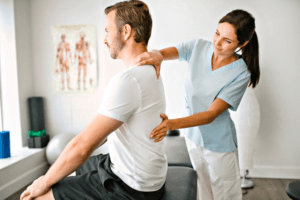
- A detailed posture and movement assessment
- Chiropractic adjustments when needed
- Soft tissue techniques like ART®, Graston, or cupping
- Gait analysis
- A personalized corrective exercise plan
- Ergonomic and lifestyle recommendations
The goal isn’t just to temporarily ease your pain—it’s to correct why the pain keeps showing up in the first place. We’ll help you adjust your posture, fix any joint issues causing pain, evaluated and help correct muscle imbalances, and create a plan based on your life, your goals, and your habits to live as pain-free as possible.
Ready to Start Relieving Back Pain?
If you’re ready to begin postural training to relieve back pain when sitting, standing, and walking, our team at Active Edge Chiropractic & Functional Medicine would love to help. With the right plan, your posture can become an asset—not a source of pain.
Schedule an appointment and start moving with confidence again.